This content type is full of IndieWeb post types, which are all content types which allow me to take greater ownership of my own data. These are likely unrelated to my blog posts. You can find a better breakdown by actual post kind below:
Visual Studio Code has become one of the most influential tools in modern software development. The open-source code editor has evolved into a platform used by millions of developers around the world, and it has reshaped expectations for what a modern development environment can be through its intuitive UX, rich extension marketplace, and deep integration
To: adam@evehusband.net
From: jeevacation@gmail.com[jeevacation@gmail.com]
Sent: Sun 01/01/-4004bc 01:03:09 a.m.
Subject: apple
you gnona eat that applle? othrwise i will eat. look delciciios
🚨CODE RED (BUT LIKE A GOOD RED): WE JUST OPEN SOURCED THE DEPENDABOT PROXY🚨
Attention Dependabot fans and security nerds: The Dependabot Proxy just escaped from its private repo and is now LOOSE ON THE INTERNET under the MIT license!
https://github.com/dependabot/proxy
All the “faster Homebrew in Rust” projects are a bit like parsing HTML with regex. The simplest use-cases seem to work, it’s easier and there’s just edge cases to fix. Fixing these edge cases requires recreating Homebrew and using Ruby (which will be slower again).
What's in the SOSS? features the sharpest minds in security as they dig into the challenges and opportunities that create a recipe for success in making software more secure. Get a taste of all the ingredients that make up secure open source ...
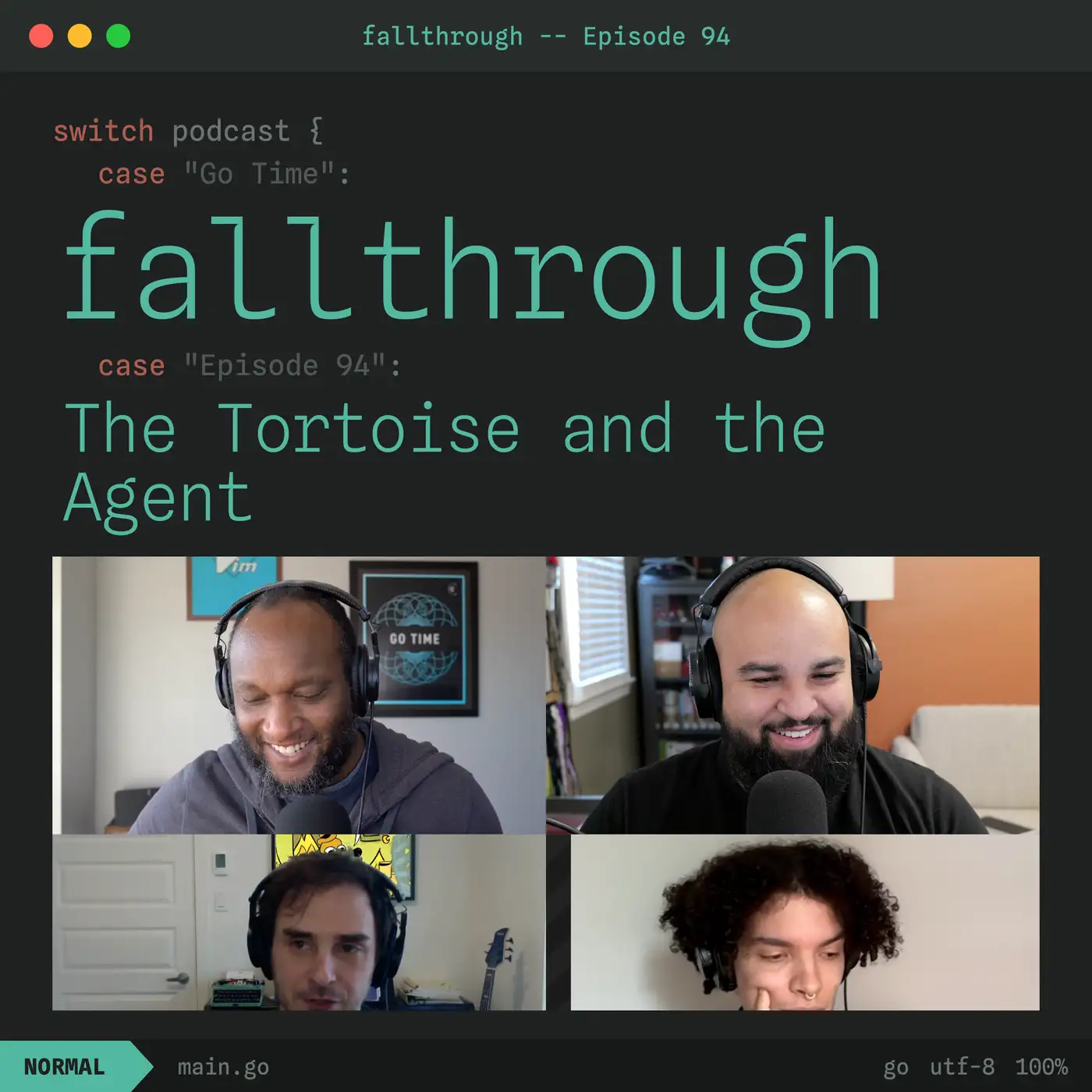
Welcome back to Break, a Fallthrough aftershow! It's just Kris and Steve for this one! After brief reflections on the Gastown discussion, the episode pivots into a deep dive on semantic versioning,...
This week we're talking about Gastown! Dylan and Steve join Kris to break down the viral project that spins up hundreds of Claude Code instances to build a software factory. Steve makes the case fo...
After all the turmoil and pain we’ve collectively suffered so Disney could keep their hands on Mickey Mouse’s copyright, it’s pretty jarring to get ads on TikTok for “AI companions” of Elsa doing the TikTok thirst coreo to CHANEL by Tyla with boob physics in a Santa outfit
Techno Tim joins Adam to dive deep into the state of homelab'ing in 2026. Hardware is scarce and expensive due to the AI gold rush, but software has never been better. From unleashing Claude on your UDM Pro to building custom Proxmox CLIs, they explores how AI is transforming what's possible in the homelab. Tim declare...
The most human-like AI agent you'll ever use. It insists on manners, gets distracted mid-task, sometimes gives up entirely, occasionally claims it did something when it didn't, ignores it...
We discuss the buzz around Clawdbot / MoltBot / OpenClaw, how app subscriptions are turning into weekend hacking projects, why SaaS stocks are crashing on Wall Street, and what it all means.
AI coding agents are rapidly reshaping how software is built, reviewed, and maintained. As large language model capabilities continue to increase, the bottleneck in software development is shifting away from code generation toward planning, review, deployment, and coordination. This shift is driving a new class of agentic systems that operate inside constrained environments, reason over
Reminder that #Renovate 43 came out yesterday! We landed a few breaking changes, so check out the release notes: https://github.com/renovatebot/renovate/releases/tag/43.0.0
As the creator and long-time maintainer of ESLint, Nicholas Zakas is well-positioned to criticize GitHub's recent response to npm's insecurity. He found the response insufficient, and has other ideas on how GitHub could secure npm better. On this episode, Nicholas details these ideas, paints a bleak picture of npm alte...
Quinn and Thorsten are back! It's been a while since they published a Raising An Agent episode and in this this episode, they discuss how everything seems to have changed again with Gemini 3 and Opus 4.5 and what comes after — the assistant is dead, long live the factory.
In this episode of Raising an Agent, Beyang and Camden dive into how the Amp team evaluates models for agentic coding. They break down why tool calling is the key differentiator, what went wrong with Gemini Pro, and why open models like K2 and Qwen are promising but not ready as main drivers. They share first impressions of GPT-5, explore the idea of alloying models, and explain why qualitative “vibe checks” often matter more than benchmarks. If you want to understand how Amp thinks about model selection, subagents, and the future of coding with agents, this episode has you covered.
In this episode, Beyang and Thorsten discuss strategies for effective agentic coding, including the 101 of how it's different from coding with chat LLMs, the key constraint of the context window, how and where subagents can help, and the new oracle subagent which combines multiple LLMs. 00:53 Intros 03:35 How coding with agents is very different from coding with prior AI tools that use chat LLMs 10:46 Example of an agentic coding run to fix a simple issue 14:28 Example of debugging an issue with an MCP server 22:05 Example of unifying two build scripts that share logic 25:24 How context window size has emerged as a key constraint on agentic automation 31:16 Why it's best to focus on one thing at a time per agentic thread 33:24 Subagents and how they help extend the effective context window 34:04 The Amp codebase search subagent 38:48 General-purpose subagents 44:20 When to use subagents 47:04 The oracle subagent and o3 51:47 Multi-model agents and using the best model for each job
@JadedBlueEyes@tech.lgbt I recently learned that GitHub allows one to view the activity on a repo, and you can limit it to [show force pushes only](https://g…
I'm legit unfollowing people who never use alt text.
You're literally typing on a text based app. So why are you making Canva images with little pithy quips and no alt text. I honestly don't understand it.
In this episode, Beyang interviews Thorsten and Quinn to unpack what has happened in the world of Amp in the last five weeks: how predictions played out, how working with agents shaped how they write code, how agents are and will influence model development, and, of course, all the things that have been shipped in Amp.